About
Carnaval San Francisco cultivates and celebrates the diverse Latin American, Caribbean and African Diasporic roots of the Mission District and the San Francisco Bay Area. We accomplish our mission through dance, music, the visual arts and by creating spaces for community learning, school–based education, and advocacy.
Now in its fourth decade of celebration, Carnaval San Francisco has been an opportunity for many cultures to come together in one spirit to share their creative expression.
Come celebrate with us at our FREE 2–day family festival in San Francisco’s Mission District where we will showcase the very best Latin American and Caribbean cultural arts and traditions. Carnaval San Francisco is the largest multi–cultural celebration on the West Coast.
Mission, Vision & Values
Our Mission
Carnaval San Francisco, the largest multicultural festival in the West Coast, is a project that CANA organizes, with the goal of educating people on the Latino, Caribbean and African Diasporic traditions of the Mission District and the San Francisco Bay Area. We accomplish our mission through dance, music, the visual arts and by creating spaces for community learning, school–based education, and advocacy.
Our Values
We value:
- Our interconnectedness through art and family
- Strong, artisanal businesses in our community
- Collaborative, cross–cultural relationships
- The healing power of cultural connection, re-connection, and reclaiming
- The intersection between art and activism
- The importance of revelry in a spiritual context
- The power of volunteerism
Our Vision
We envision a world where harmony and revelry unite all people and where Latin American, Caribbean, and African traditions and cultures are preserved and celebrated for generations to come.
Theme
2027 Theme:
Almas en movimiento
Souls in Motion
Forty-nine years, and the streets still remember. They remember the drums that echoed through San Francisco before Carnaval SF had a name, calling people together through rhythm and movement. We acknowledge the Ohlone people, the original stewards of this land, whose connection to Place came before us. Then came generations of elders, artists, organizers, dancers, musicians, and dreamers who built something that continues to live. From across the United States, the Caribbean, Latin America, Indigenous communities, and around the world, people brought their cultures, traditions, stories, and dreams to the Bay Area. Together, they shaped the soul of Carnaval SF and wove it into the cultural fabric of this place.
Almas en Movimiento is a multigenerational journey rooted in movement, dance, and resistance. We honor the pillars whose vision, sacrifice, creativity, and perseverance built the Carnaval we know today. Four generations have grown up in its music, dance, and spirit, carrying its traditions forward. We dance because they danced. We celebrate because they believed there was something worth celebrating. At 49 years, we stand on the staircase they built, one step closer to our 50th anniversary, carrying their legacy as we rise. Movement lives in the drum, the feet on the pavement, the body responding to rhythm—but also in the people who leave one place, arrive in another, and build community wherever they land. Without the people who create, organize, dance, care, and dream, there is no Carnaval SF as we know it.
Souls in Motion is love in motion. It is the love we hold for our cultures, families, neighborhoods, ancestors, and one another. For nearly five decades, that love has fed the souls of our children and youth through cultural arts, music, dance, and traditions, helping them understand where they come from and imagine who they can become. It is the love that keeps traditions alive through displacement, change, and adversity—and calls each generation to carry them forward. This year, we celebrate the souls who built the foundation, those who continue to move Carnaval forward, the four generations who have carried its spirit, and those who will carry us into the future..
Grand Parade
Our Grand Parade boasts a 60–contingent lineup, with over 5,500 artists representing the cultural heritages of Brazil, Mexico, Panama, Bolivia, Cuba, Peru, Puerto Rico, Nicaragua, Colombia, Trinidad & Tobago, Guatemala, El Salvador, and more to participate, televised by CBS. The Grand Parade covers 20 blocks in San Francisco’s historic Latino Cultural District in the Mission.
2–Day Festival
Our FREE two–day Festival covers 17 blocks in the Mission District, with five main stages, 50 local performing artists, and 400 vendors. The festival includes international food, dancing, sampling sites and entertainment for families, couples and friends of all ethnic, social and economic backgrounds.
In the 48–year history of our Festival, we have welcomed luminaries like Celia Cruz, Santana, the Neville Brothers, Tito Puentes, Luis Enrique, Poncho Sanchez, Los Lonely Boys, Oscar D’León, La India, and Los Tigres del Norte. The two-day celebration is a cultural explosion with free admission for the community. Carnaval San Francisco is the largest multicultural celebration in California.
While the festival is free to the public, donations are highly encouraged.
Cultural Arts & Health Education
Strengthening the bond between schools and the arts
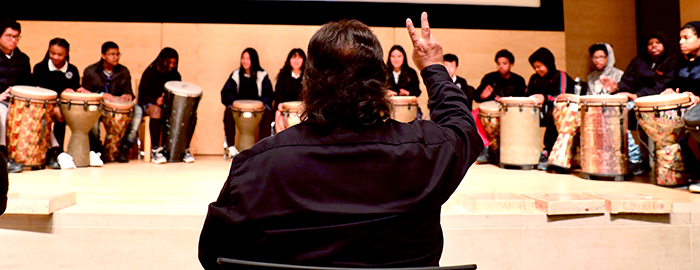
The Carnaval San Francisco Cultural Arts and Health Education Program was inaugurated as a pilot program at Flynn School in the Mission District in 2002. Flynn’s demographics included 68% Latinos (many being English Language Learners) and 16% African Americans.
Working with numerous teachers, CSF offered drumming and dance classes at Flynn seeking to increase student involvement in the arts and to prepare students to participate in the 2002 Carnaval Parade. As the program progressed, parents became involved in costume making, float building and volunteering for the program. Teachers reported that parents who had rarely visited their child’s school before became enthusiastic participants in the Carnaval SF education project. Since 2002, Carnaval has presented the program classes in 13 schools, serving over 9,000 students.
History
1978
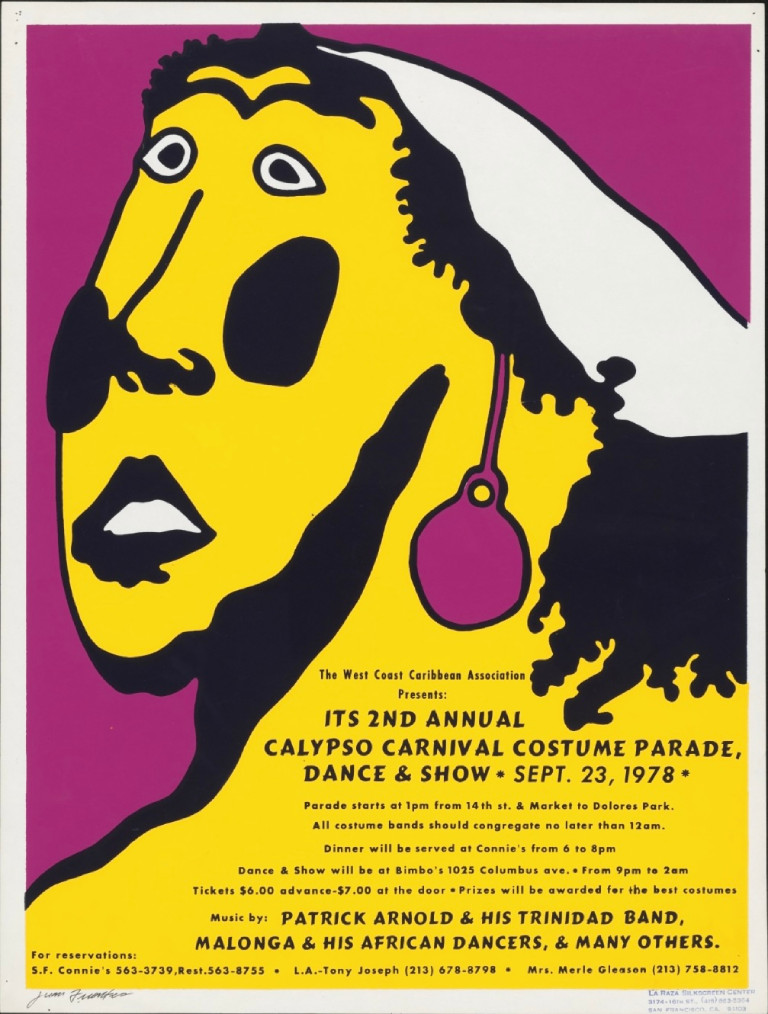
Connie Williams and the West Coast Caribbean Association brought authentic Caribbean carnival traditions—from Trinidad and Tobago—to San Francisco via food, music, and mas culture.
Williams’s 1978 costume parade were audacious, formalized public expressions of diaspora culture—predating the official Carnaval SF (1979).
The West Coast Caribbean Association’s 2nd Annual Calypso Carnival Costume Parade, Dance & Show was held on September 23, 1978, with a daytime costume parade (start at 14th and Market, ending at Dolores Park) followed by evening festivities at Bimbo’s.
Poster by La Raza Silkscreen Center
More information on Connie Williams’ legacy
1979
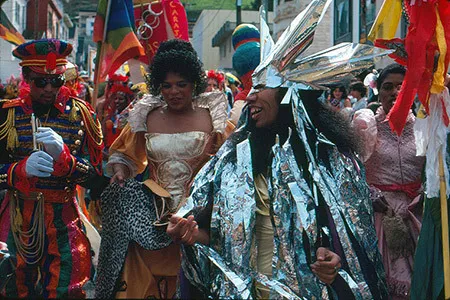
On February 25th, 1979, a windy, cold and rainy Sunday in San Francisco, about three hundred drummers and dancers, dressed in multifarious colors and shapes, paraded around Precita Park in the Mission District.
Perhaps for the uninformed passerby, it all seemed like a crazy, “hippie,” let’s-dance-half-naked-in-the-park event. For the revelers, however, it was the culmination of many months of planning and rehearsing carnival in a city that until then didn’t have one—and now can boast of hosting, if not the biggest, certainly the most diverse carnival parade in the entire country, if not the world.
Continue reading: The Birth of Carnaval on the Streets of San Francisco (foundsf.org)
Non–Profit Organization
Carnaval San Francisco is a project of Cultura y Arte Nativa de las Americas (CANA), a 501(c)3 non-profit organization.
Media & Publicity
For media inquiries, please contact:
De Alba Communications
Victoria Sanchez De Alba
(650) 270-7810
Jackie Wright
(415) 525-0410
Partners
Carnaval is a huge success thanks to your generous support!
For partnership opportunities, contact Rodrigo Duran, Executive Director at (415) 691–1147 or via email at rodrigo@carnavalsf.org